Thursday, 6 January 2022

New Study Clears the Record on CBD and Liver Damage

A new observational study by Midwest Allergy Sinus Asthma Clinic in Illinois measuring the “long-term consumption of oral cannabidiol on liver function in healthy adults” has produced favorable results for CBD advocates. 

The possibility of liver toxicity is very high on the list of concerns cited by the FDA (and some consumers) as reasons to delay creating regulatory pathways for the hemp-born compound to be sold and consumed in food, beverages, and supplements. 

On mice and in humans, some studies have argued that CBD has “hepatoprotective” (helping the liver) effects, while others like this well-known study from the University of Arkansas for Medical Sciences showed hepatotoxic effects.

Of course, the latter finding was conducted on mice, using as much as 2460mg/kg of CBD, two potentially obfuscating issues resolved by the new study in mention.

In the Midwest Allergy Sinus Asthma Clinic study, 839 participants using various forms of hemp oil (55.7% full spectrum, 3.8% broad spectrum, and 40.5% CBD isolate) were observed for 30 days.

Throughout the observation period, an app-based platform called ValidCare was used to collect data, including participant demographic information, reasons for taking hemp oil, dosage, and more.

At the conclusion of the observation period, participants underwent liver tests, which measure various liver enzymes (aspartate aminotransferase, alkaline phosphatase, and others) to determine whether or not liver damage has occurred.

The results indicated that liver enzyme elevations were “not significantly different from known adult general population,” and that there was no connection between CBD and liver test readings.

The US Hemp Roundtable, the nation’s leading hemp advocacy organization, blasted the FDA over the results of the study.

“While the FDA continues to cite lack of safety data for delaying the development of a regulatory framework for CBD and other cannabinoids, this new evidence puts into question the agency’s own claims and arguments against moving forward with regulation,” said the Roundtable in a post on its website.

The organization also continued its call for federal legislation: “The findings from this study and prolonged inaction by FDA to regulate CBD continue to underscore the urgency for Congress to prioritize passing a legislative solution this year.”

The post New Study Clears the Record on CBD and Liver Damage appeared first on The CBD Insider.


via The CBD Insider https://thecbdinsider.com/news/new-study-clears-record-cbd-liver-damage/#utm_source=rss&utm_medium=rss&utm_campaign=new-study-clears-record-cbd-liver-damage


source https://renzverspaget.weebly.com/blog/new-study-clears-the-record-on-cbd-and-liver-damage

source https://renzverspaget.blogspot.com/2022/01/new-study-clears-record-on-cbd-and.html

source https://mervinkuiper.tumblr.com/post/672672460305481728

Thailand Could Become a Leader in International Strain Registration

Thailand was not always a progressive place for cannabis policy. However, it has certainly made up for lost time.

It was the first country in its entire region to legalize cannabis for medical use, with Thailand’s medical cannabis model including a provision for all households to cultivate cannabis and sell it.

Thailand’s government even issues very low interest loans for aspiring cannabis cultivators. Considering how harsh the region’s cannabis laws are, Thailand’s cannabis policy is particularly inspiring.

Adult-use legalization is on the horizon in Thailand. If the government has its way, Thailand will have local strains registered at the international level.

Unesco Recognition

The Department of Thai Traditional and Alternative Medicine has announced plans to register local cannabis strains as national heritage items, after which Thailand will pursue Unesco recognition.

According to Unesco’s website, “UNESCO is the United Nations Educational, Scientific and Cultural Organization. It seeks to build peace through international cooperation in education, sciences and culture.”

The Department of Traditional and Alternative Medicine has analyzed 30 strains that are dominant in the country, recorded the DNA of each strain, and will use the related information to “register geographical indications.”

The move is timely, with Thailand’s Ministry of Public Health indicating in recent weeks that the government plans to pursue “full legalization” in 2022.

Beginning of a Trend?

Thailand is obviously not the only region of the planet where particular cannabis strains are synonymous with the country itself.

Jamaica is well known for its cannabis varieties, as are South American countries like Colombia and its famed “Colombian Red” strain.

Mexico, which is also pursuing ambitious cannabis industry plans similar to Jamaica and Colombia, is famous for such strains as Acapulco Gold, Michoacan, and Oaxacan.

Many regions of the world are home to world-class cannabis strains, and even though those strains have spread throughout the world, they will always be known for where they originated.


Via https://cannatechtoday.com/thailand-could-become-a-leader-in-international-strain-registration/


source https://renzverspaget.weebly.com/blog/thailand-could-become-a-leader-in-international-strain-registration

source https://renzverspaget.blogspot.com/2022/01/thailand-could-become-leader-in.html

source https://mervinkuiper.tumblr.com/post/672653614962081792

What Is Delta-8-THC? Here’s Everything You Need to Know

Whatever you’ve heard about CBD products or not, one of the terms you have probably picked up is THC or tetrahydrocannabinol. Actually, there is a little confusion surrounding the understanding of this chemical compound. People commonly equate THC with Delta-9-THC, which is incorrect. Truth be told, THC is a group of elements that consists of different types of THCs. In this article, we will explain what Delta-8-THC (another representative of THCs) is and what its characteristics are.

1. Basics of THC

THC or tetrahydrocannabinol is a chemical compound and one of over 100 cannabinoids found in the hemp plant. THC works by attaching to the body’s cannabinoid receptors, which are found throughout the brain and nervous system. Some people contrast THC with CBD because, unlike CBD, THC can cause the so-called “entourage effect”.

But THC is the name of not just one compound. Besides the more popular Delta-9-THC, there is Delta-8-THC, which is present in the plant at a concentration of 0.01%.

2. What is Delta-8-THC?

Delta-8-THC, which is analogous to Delta-9-THC, is almost the same as its counterpart. The difference is in their molecular structure. Delta-9-THC is readily oxidised to form cannabinol, a biologically inactive cannabinoid, whereas Delta-8-THC is stable.

3. What are the features of Delta-8-THC?

Since Delta-8-THC has a slightly different molecular structure than Delta-9-THC, some of its features can also vary. So, what makes Delta-8-THC so special?

  • Different potential binding to brain cells

Given that both the above compounds don’t have identical molecular structures, they can bind differently to CB1 receptors. In this case, Delta-8-THC has a lower affinity for CB1 receptors than Delta-9-THC.

  • Delta-8-THC is less psychotropic

Due to Delta-8-THC potentially having a lower affinity, it can be considered less psychotropic than its counterpart.

  • Delta-8-THC is less researched

In many of our blog articles, we have told you that CBD and THC have not been well researched. Concerning Delta-8-THC in particular, the situation is even more uncertain as there’s a huge lack of studies on this compound.

  • Greater uncertainty about its legal status

Delta-8-THC lies in a grey area, and the question of its regulation is still debatable. There are two aspects to this issue: First, Delta-8-THC is strictly banned or restricted in some regions (for example, 18 states in the US). And second, the definition of THC is not limited to Delta-9-THC only but also includes Delta-8-THC, and all THCs are measured in the total permissible THC level. THC legislation also differs from one country or region to another. For example, THC is prohibited in France, but in Switzerland, there is a maximum limit of 1.0% THC content.

4. Precautions

There are several precautions everyone should know about when using Delta-8-THC.

  • Be mindful of THC’s legal status

As you can see, Delta-8-THC is a grey area in terms of legal regulations, so it’s vital to carefully check the local and international legislation on THC to find out if there are any particular rules for Delta-8-THC.

  • Don’t forget that it has not been well researched

The lack of studies on Delta-8-THC leads to uncertainty about the potential effects of using products containing such a compound.

  • Possible side effects are also an important consideration

Yes, side effects can occur. As Delta-8-THC has not been well researched, it is difficult to say what side effects it could have.

  • Mandatory checking of third-party testing results

This is a general safety measure that will help ensure you receive the highest quality product, with the composition as indicated on the label.

5. Final thoughts

In this article, we have covered some basic information about Delta-8-THC, cousin of Delta-9-THC. Besides sharing many similarities, there are also slight differences in certain aspects. Delta-8-THC is a less common compound found in the hemp plant, and it has also been less studied. Will it receive more scholarly attention in the future? It’s only a matter of time.

6. Sources

1. Learn Why Delta 8 THC is the Latest Cannabis Compound Buzz (https://www.cannalist.eu/learn-why-delta-8-thc-is-the-latest-cannabis-compound-buzz)

2. What is delta-8 THC and is it legal? (https://www.nutritionaloutlook.com/view/what-is-delta-8-thc-and-is-it-legal-)

3. The Feds Are Coming For Delta-8 THC (https://www.forbes.com/sites/chrisroberts/2021/09/17/the-feds-are-coming-for-delta-8-thc/?sh=5c0e75de6d27)


from Marry Jane https://marryjane.com/blog/what-is-delta-8-thc-heres-everything-you-need-to-know/

source https://mervinkuiper.tumblr.com/post/672641090797682688

Wednesday, 5 January 2022

What is the Difference Between Flavonoids and Terpenes?

You may have heard about the compounds within the cannabis plant that give it smell, color, and taste but you probably didn’t know these compounds are split between flavonoids and terpenes.

In the article below you’ll learn exactly what makes each special to the plant and what effect they have on you.

What are flavonoids?

Flavonoids are one of the most understudied elements in the cannabis plant. What we do know about flavonoids is the effect they have on flower.

This lesser-known compound is responsible for the pigmentation that flower gets from forest green colors to deep purple. It’s all controlled by the flavonoids in your weed.

They also have an effect on the aroma and flavor of your flower and flavonoids work pretty closely with terpenes and cannabinoids to have therapeutic effects on the body. 

There are only 20 different flavonoids in the cannabis plant but they are all unique to that specific plant.

Otherwise, scientists have found flavonoids thousands of times occurring naturally in different plant species. 

Flavonoids are rich in antioxidants so they help regulate cell activity and help protect against toxins in the body. 

Both flavonoids and terpenes can be found in CBD as well. 

What are terpenes?

Terpenes are similar to flavonoids in that they also control the scent and flavor of the cannabis plant.

There are a lot more terpenes than there are flavonoids though. About 100 different terpenes live in the cannabis plant and each type of plant has its own unique terpenes. 

Terpenes can be found in flowers, herbs, and fruits, not just cannabis. It’s been studied to have wellness and therapeutic effects on the body. 

How Flavonoids Affect Your Experience

The antioxidants contained in flavonoids heavily affect your experience when smoking cannabis. 

Cannflavin A is a flavonoid that is responsible for decreasing inflammation in the body and studies have shown it might be stronger than taking aspirin for pain.

Cannflavin B is very similar to cannflavin A and has most of the same anti-inflammatory properties. 

Cannflavin C is another flavonoid that has anti-properties similar to A and B and more research is being done on exactly how it interacts with the body. 

Kaempferol is another flavonoid with anti-inflammatory properties but it also has antioxidant properties. It’s been shown to help with depression and could even reduce the risk of heart disease. 

Quercetin is one of the most effective flavonoids in cannabis because it has antidepressant, antioxidant, antifungal, and antiviral properties. 

Orientin is another well-rounded flavonoid that has multiple effects on the body. It possesses antioxidant, antibiotic, anti-inflammatory, and neuroprotective properties and this flavonoid can also be found in teas.

Sylmarin has antioxidant properties but it’s also been shown to have cancer-fighting abilities as well.

How Terpenes Affect Your Experience

Terpenes have a huge effect on the serotonin and dopamine systems in the body which is why some strains of marijuana will make you feel relaxed while others stimulate your creativity.

There are too many different terpenes to cover here but here are some of the more common types. 

Myrcene isn’t included in all strains of marijuana and is more predominant in indica strains.

The terpene is responsible for lowering inflammation in the body and is commonly used as a supplement treatment to cancer. 

Linool helps users feel more relaxed in their muscles and it can also reduce the feeling of anxiety or nervousness. 

Humulene is a terpene that has a big effect on  regulating appetite and hunger. This is what could be leading to users getting the munchies after a smoking session. 

Alpha-pinene has been shown to have an effect on the respiratory system and can even decrease inflammation in the lungs. It can be especially helpful with conditions like asthma. 

Limonene is another terpene that is more popular with indica strains and it’s been shown to have an effect on patients that suffer from depression. The terpene is a deep sedative and helps patients relax when using it. 

The Difference Between Flavonoids and Terpenes

Although flavonoids and terpenes both have effects on the body and can even function in similar ways, they aren’t always found in the same strains and there are a lot more terpenes than flavonoids. 


Via https://cannatechtoday.com/what-is-the-difference-between-flavonoids-and-terpenes/


source https://renzverspaget.weebly.com/blog/what-is-the-difference-between-flavonoids-and-terpenes

source https://renzverspaget.blogspot.com/2022/01/what-is-difference-between-flavonoids.html

source https://mervinkuiper.tumblr.com/post/672559228906586112

Tuesday, 4 January 2022

Cannabis Prosecutions in Ireland Fell by Nearly Half in 2021

As cannabis legalization efforts continue to gain momentum on the European continent, smaller reforms are also taking hold.

Cannabis decriminalization is one such reform, and thankfully, more European nations are enacting cannabis decriminalization policies.

Decriminalization may not be as good as outright legalization, but it’s better than subjecting people to jail time.

Ireland is one country in Europe that has decriminalized cannabis in some instances. According to new data, it’s a policy that appears to be working.

Prosecutions Reduced Dramatically

Under current law, if someone is caught with a personal amount of cannabis in Ireland and there is no indication of illegal sales, the person can receive a fine of 1,000 euros instead of jail time.

According to prosecution data from Ireland, 11,127 people were prosecuted for cannabis offenses in 2020.

In 2021 that figure dropped to 5,957 prosecutions. Unfortunately, prosecutions for cultivation increased from 2019 to 2020 (the most recent data available).

Prosecutions for distributing cannabis in Ireland fell from 1,968 cases in 2020 to 1,283 cases in 2021.

A Stepping Stone Towards Legalization

The data out of Ireland as it pertains to personal possession is great news. With that being said, the situation could obviously be improved.

Until the number of prosecutions goes all the way down to zero, there will still be work to do for cannabis advocates and activists in Ireland.

Malta recently passed an adult-use legalization measure, and Germany and Luxembourg are expected to do the same in the near future. Italy will likely be voting on a legalization measure this year.

The Netherlands and Switzerland recently launched adult-use legalization pilot programs that include legal cannabis cultivation and sales in certain jurisdictions.

Hopefully, that all encourages Ireland to move beyond decriminalization towards full legalization. It’s good public policy for cannabis consumers as well as for taxpayers.


Via https://cannatechtoday.com/cannabis-prosecutions-in-ireland-fell-by-nearly-half-in-2021/


source https://renzverspaget.weebly.com/blog/cannabis-prosecutions-in-ireland-fell-by-nearly-half-in-2021

source https://renzverspaget.blogspot.com/2022/01/cannabis-prosecutions-in-ireland-fell.html

source https://mervinkuiper.tumblr.com/post/672464859009531904

10 Celebrities Who Take CBD Oil

You may see them on your screens and hear them on the radio, but do you really know who your favourite celebrities are as people? Just like everyone else, stars look for ways to improve their lives and overall health. While you may think they buy the most expensive miracle products or get plastic surgery on a whim, you’ll be surprised how many prefer natural methods of improving themselves and their health by using products such as CBD.

Here are ten celebrities who take CBD oil and why you should do the same.

10 Celebrities Who Take CBD Oil

These celebrities have three things in common: they’re rich, famous, and love CBD.

Gwyneth Paltrow

Actress and founder of Goop, Gwyneth Paltrow, swears by CBD, calling it the “hero ingredient of the future” for health and wellness. She believes in it so much she invested in Cann, a cannabis-infused beverage company.

Paltrow is the latest actress to invest in the cannabis industry. She says she was attracted to Cann as she believes it is an excellent alternative to alcohol.

“There’s a whole sober-curious movement that’s going on and the cannabis-curious movement that’s going on, this is kind of at the intersection of those things in a way,” says Paltrow.

Paltrow believes that it’s just a question of time before the cannabis industry becomes mainstream. “We’re very clearly and definitively moving in the direction of cannabis being legalised, and I think it should be,” she says.

“I do think that there are amazing medicinal qualities to it, and it is really helpful for a lot of people.”

Jennifer Aniston

America’s sweetheart Jennifer Aniston is another fan of CBD oil. The former Friends actress says she uses CBD oil for stress, pain and anxiety as it has all the benefits of cannabis without the high. She must be doing something right; she has never looked better or healthier!

Emma Roberts

Another actress besotted with CBD oil is Emma Roberts. The American Horror Story star regularly posts stories to her Instagram of her favourite CBD products and uses the hashtag #notanad. You know they really like it if they don’t do it for money.

Roberts says her favourite CBD oil-infused products are bath bombs that she regularly uses to relax and unwind.

Morgan Freeman

The man who everyone would love to narrate their life, Morgan Freeman, is a fan of CBD oil. In 2012, the actor admitted to suffering nerve damage in his hand after a near-fatal car accident in 2008 and from Fibromyalgia, which is a chronic condition that causes pain throughout the body.

Freeman explains that he has been dealing with his chronic pain over the years by using CBD. He says CBD helps him live a normal, healthy life, and he won’t be giving it up anytime soon.

Kristen Bell

Kristen Bell is such a big fan of CBD that she launched her own CBD infused skincare line with Lord Jones called Happy Dance.

Bell first came into contact with CBD when her hairstylist used some CBD cream on her shoulders. The actress says she felt the benefits almost immediately and knew she needed to try it out for herself. “It’s hard to explain what it did to me,” Bell recalls.

“But I just felt this overall improvement, and at the end of a chaotic day, using any Lord Jones product made me feel like I was either turning down the volume on my children or turning the thermostat of my life to exactly the right temperature.”

CBD quickly become a big part of her life, but she felt that there was still something missing from the market. “I contacted Lord Jones and just asked them if we could create a product together that demystifies CBD, that doesn’t play into the stoner trope or feel too clinical, but that feels cheeky and a little more me, and at a price point that can be more accessible,” she says.

“I really wanted to allow people who had not used it before or who had not been exposed to it the accessibility, and in any of my entrepreneurial ventures, that’s always been the priority.”

The actress can’t stop herself from gushing about CBD. “It provides a calm sense of wellbeing, and it calms and soothes when you need it most. For me, after a long stressful day, there is nothing like taking a bath with our CBD bath bomb,” she adds.

Bella Thorne

Another actress who was inspired to start her own CBD brand is Bella Thorne. The former Disney star has admitted to having anxiety and depression when she was younger and revealed that she believes CBD oil was the only thing that helped her.

Thorne launched Forbidden Flowers, a cannabis brand she developed and uses herself. She personally tests every new product before selling it and is a huge advocate for cannabis.

Michael J. Fox

At the tender age of twenty-nine, Back to the Future star, Michael J. Fox was diagnosed with Parkinson’s disease. In the year 2000, the actor founded the Michael J. Fox Foundation for Parkinson’s Research. This foundation has intensely studied the use of CBD, cannabis and marijuana to discover whether it can help Parkinson’s Disease.

The MJFF funds various CBD-related studies that can show how cannabinoids could potentially protect brain cells. So far, the foundation has found preliminary evidence that shows cannabinoids from CBD could protect people’s brain cells thanks to their anti-inflammatory and antioxidant properties. However, research is ongoing, and no definitive claims can be made without much more research.

Olivia Wilde

House star Olivia Wilde says she uses CBD to relax. The actress explains that she started using a body lotion infused with CBD after hurting her body during a play on Broadway. She says the CBD lotion helped with the pain and had relaxing benefits, which meant she could skip painkillers. She also uses CBD oils for the pain she has in her feet after wearing high heels.

John Legend

Yet another celebrity who has jumped on the CBD bandwagon is Grammy award-winning singer John Legend. The crooner has partnered with PLUS Products to introduce a line of CBD oil and edibles.

Legend is a long-time believer in the benefits of CBD, and investing in the market was the next logical step.

Whoopi Goldberg

Avid CBD advocate, Whoopi Goldberg, is extremely passionate about CBD and its potential benefits, especially the benefits it has for women. So much so that she founded her own CBD company called Whoopi & Maya medical cannabis in 2018.

She wants there to be CBD products that help women specifically, as she feels there are not enough of these products for women, so she decided to create CBD products targeting them.

Goldberg concentrates on helping women dealing with cramps, period pain, nerve pain and menopause. The actress herself uses CBD oil for her Glaucoma and to relieve pain and stress.

Why Should You Use CBD Oil?

As can be seen above, many celebrities hail CBD as their go-to product. If people with all the money in the world are relying on something as natural and affordable as CBD oil, don’t you think you should give it a try to see what all the fuss is about?

While research is ongoing, findings show that CBD oil could hold many benefits, from relieving pain to helping skin condition and more. Not to mention its antioxidant and anti-inflammatory properties.

Besides, what’s good enough for Jennifer Aniston is good enough for us!

The post 10 Celebrities Who Take CBD Oil first appeared on CBD Village UK.

from CBD Village UK https://www.cbdvillage.co.uk/cbd-oil/10-celebrities-who-take-cbd-oil/
via IFTTT

source https://mervinkuiper.tumblr.com/post/672444234619650048

Monday, 3 January 2022

Cannabis Courses Join the Roster at Major Universities

If you were entering college and heard about a new industry that had grown 46% since 2019, would you pursue a degree in that field? If so, you’d be one of the thousands of students considering an education in cannabis. 

Forbes reported cannabis sales hit a new record of $17.5 billion in 2020, up nearly double from the year prior.

Institutions of higher learning aren’t about to miss out on the boom. According to Leafly, there are now 321,000 full-time American cannabis jobs.

There are even some cannabis companies offering scholarships to help their employees expand their expertise. Veriheal and Steadfast Labs, for example, are offering $1,200 scholarships annually to staff pursuing cannabis studies. 

Institutions Offering Cannabis Education

With the industry’s expansion, it’s not surprising many accredited universities are investing time and money into cannabis education. Some universities only offer a few classes while others have full degrees in cannabis. With so many options available, students can choose whichever classes best suit their needs and interests.

Northern Michigan University

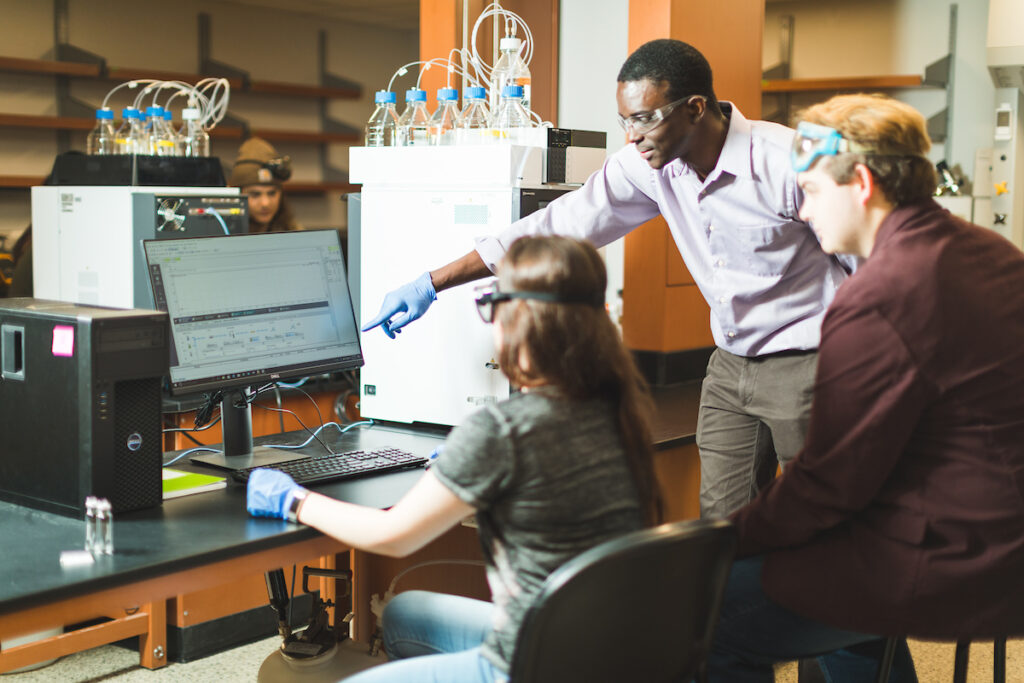
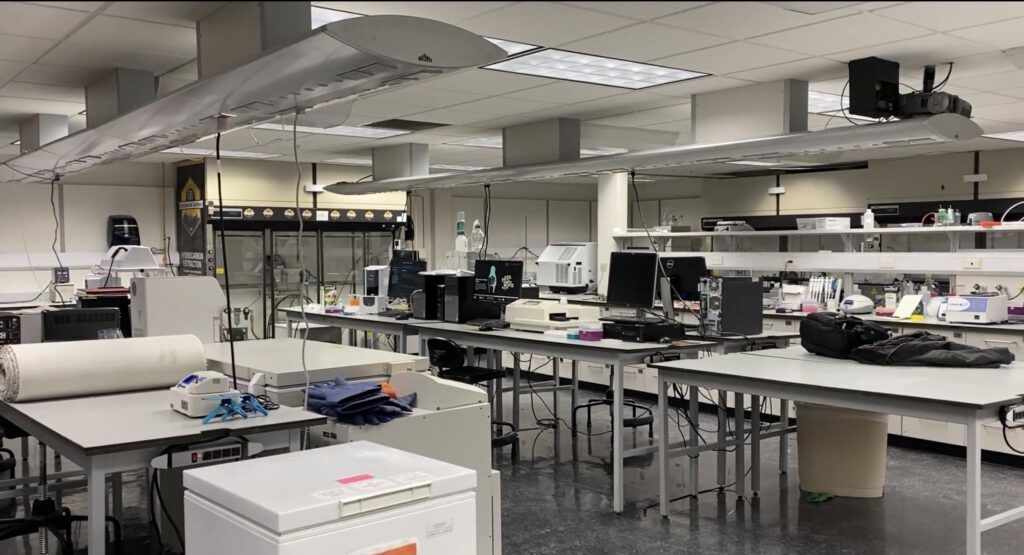
Shimadzu Analytical Core Laboratory for Medicinal Plant Sciences. Photo courtesy of Northern Michigan University.

NMU began offering a degree in medicinal plant chemistry in 2017.

The program debuted as “the only four-year degree program of its kind to combine experimental horticulture and advanced analytical chemistry with an optional entrepreneurial track,” said NMU’s News Director Kristi Evans.

They are now offering a multidisciplinary indoor agriculture associate degree for careers in medicinal plant and agricultural food production.

Photo courtesy of Lake Superior State University.

Lake Superior State University

In 2019, LSSU began offering a degree in cannabis studies with a focus on cannabis chemistry. They’ve since added a degree in cannabis business. The university’s Cannabis Center of Excellence offers courses like cannabis economics, cannabis law and policy, and survey of cannabis business. 

Western Illinois University

Western Illinois University offers a cannabis production minor and a cannabis culture minor. Cannabis production is focused on horticulture sciences and plant physiology where students take classes like crop biotechnology. 

The cannabis culture minor focuses on how the prohibition of cannabis negatively affected the lives of people of color. Students with this minor would take classes like contemporary moral problems and cannabis & popular culture.

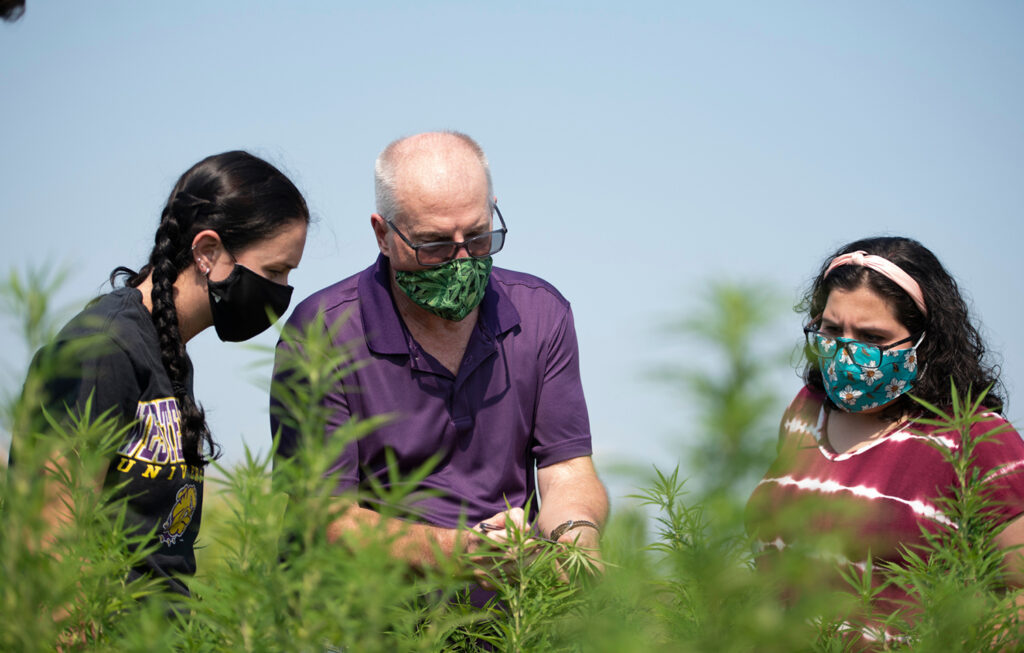
Biology Faculty and Students in Industrial Hemp Field. Photo courtesy of Western Illinois University.

Ohio State University

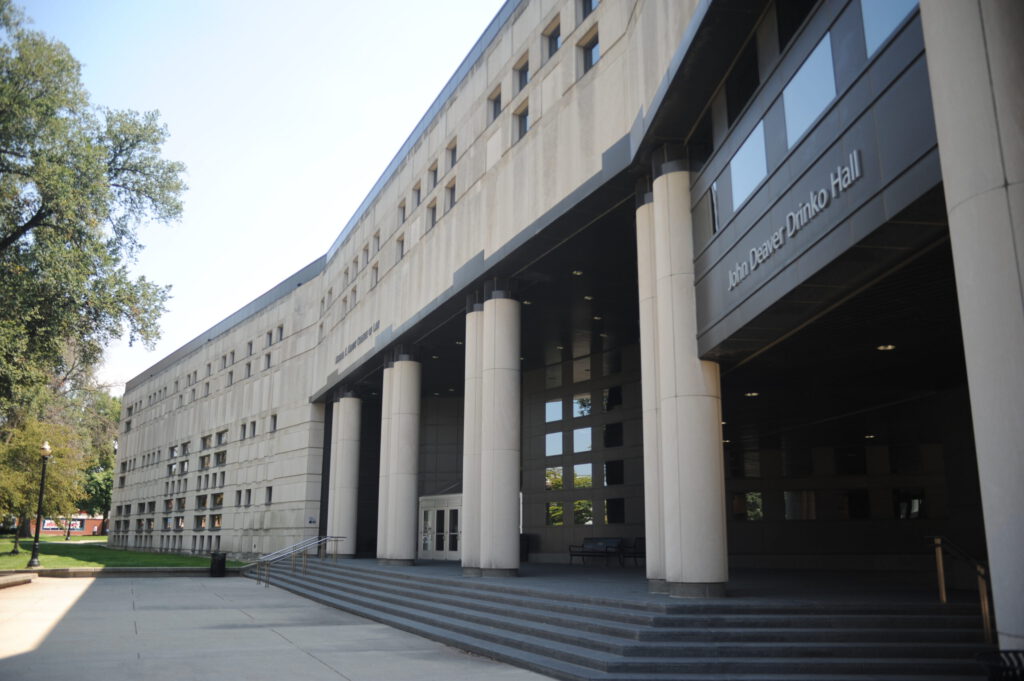
Ohio State University’s Moritz College of Law offers a course on marijuana law and policy and a seminar on marijuana law. One popular course is cannabiz: exploring the “legalized” cannabis industry from a corporate transactional perspective.

It focuses on a business-first approach to initiatives on decriminalization and legalization. It will also discuss the long history of marijuana and policies already in place. 

Stockton University

In New Jersey, Stockton University students can get a minor in cannabis studies. Every student with this minor is required to take medical marijuana and the cannabis law courses.

The university also offers an online cannabis certification course. It is composed of six courses, including cannabis cultivation, introduction to research in medical and adult-use cannabis, and introduction to business. 

SUNY Morrisville

At New York’s SUNY Morrisville, they also offer a cannabis industry minor. The six courses required are based on understanding a variety of production and processing techniques and evaluation of market trends. Some of the course options are hemp production & processing and soil science.

Photo courtesy of Ohio State University.

University of Denver 

The University of Denver’s Sturm College of Law offers many classes on marijuana law and policy. One of the courses currently featured is representing the marijuana client. The course focuses on the challenges of representing a person with cannabis offenses amidst frequently changing rules and regulations.

Colorado State University Pueblo 

The Pueblo division of Colorado State University created the Institute of Cannabis Research in 2016, offering the nation’s first multi-disciplinary cannabis research center at a regional institution. Pueblo’s campus offers a degree in cannabis biology and chemistry and a minor in cannabis studies.

University of California – Davis

As California is one of the hottest spots for cannabis, it’s no surprise the University of Califonia – Davis offers a course called medicinal cannabis and chronic pain. The Davis section of the University of California is the only area that offers this course.

Are Cannabis Degrees Legitimate?

Graduating with a degree in cannabis is not as strange as it sounds. Cannabis job openings are growing faster than any other industry. According to a study by Leafly, by 2029 there will be an increase of 161% of cannabis jobs in America alone. 

Unfortunately, there seem to be no federal accreditation agencies for cannabis-related education. As federal legalization of marijuana hasn’t arrived just yet, the funds that could possibly go to creating one is more likely to go to established agencies. Additionally, the programs and courses must adhere to federal rules and regulations. 

According to the ANSI National Accreditation Board’s Cannabis Testing Lab Accreditation Program, accredited laboratories are allowed to perform relevant testing on “cannabinoid testing and content like CBD, THC, and CBG, terpene profiles, pesticides, microbiological contaminants such as mold and bacteria, heavy metal, and residual solvents.” This means that cannabis labs on college campuses must adhere to this set of rules and regulations as well.

Is pursuing a degree in cannabis a wise choice? It is looking more and more likely that federal legalization is coming soon. Getting in on the ground floor of any new industry is often profitable, even if it requires some hard work and a lot of patience. Cannabis degrees are legitimate and give students a chance to learn about something they’re passionate about. 

The cannabis space is full of opportunities in science, engineering, chemistry, math, and technology. People passionate about the plant are not pursuing the study of intoxication, they’re helping expand an industry focused on medical innovations and lucrative business opportunities. ϖ


Via https://cannatechtoday.com/cannabis-courses-join-the-roster-at-major-universities/


source https://renzverspaget.weebly.com/blog/cannabis-courses-join-the-roster-at-major-universities

source https://renzverspaget.blogspot.com/2022/01/cannabis-courses-join-roster-at-major.html

source https://mervinkuiper.tumblr.com/post/672359176529494016

New Innovative Tech Is Changing Cannabis Finance

TESTSTSARDSAR New, Innovative Tech Is Changing Cannabis Finance by Patricia Miller The Emerging Markets Coalition (EMC) is a member-dri...